

Browse 18 cigarette cartons in Australia at lower unit prices than singles. Health and regulatory information first, with fast discreet delivery.
Cigarette Cartons Australia
Cigarette Cartons Australia
Cigarette Cartons Australia
Cigarette Cartons Australia
Cigarette Cartons Australia
Cigarette Cartons Australia

Cigarette Cartons Australia
Cigarette Cartons Australia
Cigarette Cartons Australia
Cigarette Cartons Australia
Cigarette Cartons Australia
Cigarette Cartons Australia
Cigarette cartons in Australia
This category holds 18 cigarette carton products, priced in Australian dollars and delivered discreetly Australia wide.
This is the one category in the store where the honest thing to lead with is not a buying guide. Tobacco is the most heavily regulated consumer product in Australia and the most clearly harmful thing sold here, and a page that opened with flavour notes would be doing something dishonest. So the health and legal position comes first, and the practical buying information follows it.
On this page
- The health position, stated plainly
- If you are thinking about stopping
- How tobacco is regulated in Australia
- Plain packaging and what it means for you
- What a carton is
- Why cartons cost less per unit
- Cartons against single packs
- Storage
- Illicit tobacco
- What smoking actually costs in Australia
- A note on switching to vaping
- Delivery and packaging
- Reducing without stopping
- Carton questions answered
The health position, stated plainly
Smoking is harmful. It is the leading cause of preventable death and disease in Australia, and there is no controversy about that and no version of this page that pretends otherwise.
There is no safe level of smoking and no safe way to smoke. Reduced consumption is better than heavy consumption, but the only thing that removes the risk is stopping.
We sell this product because it is legal to sell to adults who choose to buy it. That is a different thing from recommending it, and we are not going to blur the two. The Department of Health and Aged Care publishes the evidence, and it is worth reading rather than taking a retailer word for any of this.

If you are thinking about stopping
This section is on this page deliberately, because the people most likely to read a cigarette carton page are people who smoke, and that is precisely who this information is for.
Support genuinely improves the odds. Quitting with structured help is substantially more likely to succeed than quitting unaided, and the services in Australia are free.
Quit provides counselling, tools and a callback service. healthdirect Australia covers the health side and can direct you to services in your state. Your own doctor or pharmacist can discuss options including approved cessation products, which are a regulated medical pathway rather than something bought at retail.
If you are not ready to stop, that is your decision to make. The information stays here for whenever it becomes useful.
How tobacco is regulated in Australia
Australia regulates tobacco more tightly than almost any other country, and the framework is set federally with additional state and territory rules layered on top.
That framework covers packaging, labelling, advertising, where products may be used, who may sell them and to whom. It has changed repeatedly and continues to change. We are a retailer and not a legal adviser, so rather than summarise rules that may be out of date by the time you read this, the Department of Health and Aged Care publishes the current position and your state or territory health department publishes what applies locally.
Age restrictions apply strictly. See the age verification policy.
Plain packaging and what it means for you
Australia requires standardised packaging on tobacco products, which has a practical consequence worth knowing when buying.
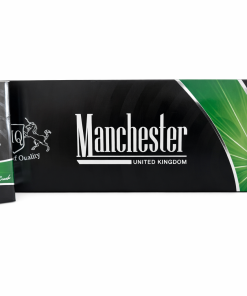
Because branding is standardised, packs give you far less visual information than consumers in other countries are used to. Brand and variant names remain, but the design cues people habitually use to identify a product at a glance are absent by design.
The practical implication is to read the variant name carefully rather than relying on appearance. It is genuinely easy to buy the wrong variant of a familiar brand when the packs look alike, and that is a direct consequence of how the regulation works rather than anything a retailer controls.
What a carton is
A carton is a multipack containing several individual packs of the same product, sold as one unit.
It is the same product as buying the packs individually. Nothing about the contents differs, only the quantity and the unit price.
Why cartons cost less per unit
The saving is a straightforward volume discount rather than anything more interesting. Handling and packaging one carton costs less than handling several separate packs, and that difference is passed on.
Whether it is a saving in practice depends on something the price cannot tell you. If buying in larger quantity leads to using more, the lower unit price does not produce a lower total. That is a well documented pattern with any product bought in bulk, and it is worth being honest that it applies here as much as anywhere.
If you are buying a carton specifically to reduce spending, it is worth tracking whether consumption stays the same. If it does, the saving is real. If it rises, it is not.
Cartons against single packs
| Carton | Single pack | |
|---|---|---|
| Unit price | Lower | Higher |
| Upfront cost | Higher | Lower |
| Deliveries needed | Fewer | More |
| Risk of using more | Higher | Lower |
| Storage required | More | Minimal |
Storage
Cool, dry and sealed, away from direct light and heat. Tobacco dries out when exposed to air, which changes how it burns and tastes, and it absorbs odours readily from whatever it is stored near.
Keep cartons sealed and open one pack at a time rather than several, which is the simplest way to keep the remainder in condition.
Store out of reach of children, per the age verification policy.
Illicit tobacco
Australia has a significant illicit tobacco trade, driven by the price difference between duty paid product and product that has avoided it.
Beyond the legal exposure, the practical problem is that illicit product is entirely unregulated. Nothing about its contents, handling or manufacture has been subject to any oversight, and the assurances that come with legitimate supply do not apply.
Pricing dramatically below the market is the clearest signal, since duty is a large component of the legitimate price and no legitimate seller can be far below it. The Australian Border Force covers importation rules, and general guidance on identifying dubious sellers is on the payment and security page.
What smoking actually costs in Australia
Australia has among the highest tobacco prices in the world, deliberately, because price is one of the most effective levers governments have for reducing consumption.
The practical consequence is that the annual cost of a regular habit here is substantial, and it is a figure most people avoid calculating. It is worth doing anyway. Take what you spend in a typical week and multiply it by fifty two. For a daily smoker the result is usually considerably larger than expected, because a purchase that feels routine repeats several hundred times a year.
That calculation is presented here for a specific reason rather than as a scolding. Cost is one of the most commonly cited motivations among people who successfully stop, more so than health for many, because it is concrete and immediate where health consequences feel distant. If the number surprises you, that is information worth having.
Buying by the carton lowers the unit price, which is genuinely the cheaper way to buy if consumption stays constant. It does not change the underlying annual figure much, and it will increase it if larger quantities lead to using more.
If the cost is a factor for you, the free services listed above are the most effective response available, and they cost nothing.
A note on switching to vaping
People frequently ask about moving from cigarettes to vaping, and the honest answer is more qualified than either side of that debate usually admits.
What can be said clearly is that the regulatory position in Australia treats these as different product categories with different rules, and that position has changed materially in recent years. Vaping products are not regulated here as a general consumer alternative to cigarettes, and there is a specific pathway involving a doctor for products intended to help with cessation.
What we are not going to do is tell you that switching is safe, or better, or a solution, because those are health claims and a retailer is not in a position to make them. Anyone selling you both products has an obvious interest in the answer, which is precisely why you should not take it from them.
If you are considering this specifically to stop smoking, speak to a doctor or pharmacist, and read the TGA vaping hub and Quit rather than a shop. Those sources have no stake in what you decide.
Delivery and packaging
Orders ship Australia wide in plain outer packaging with tracking on every dispatched order. Carriers apply their own procedures for age restricted deliveries, which can include refusing to hand a parcel to someone who appears underage. See the shipping and delivery page.
Reducing without stopping
Not everyone who smokes wants to stop, and treating reduction as a failed attempt at quitting is unhelpful. So a few practical points for anyone who simply wants to smoke less.
Count rather than estimate. Most people underestimate their own consumption, sometimes substantially. A week of actually counting is more informative than any amount of guessing and it costs nothing.
Identify the automatic ones. Consumption tends to divide between cigarettes genuinely wanted and cigarettes smoked out of habit, tied to a particular moment such as a break, a coffee or a phone call. The automatic ones are the easiest to remove because they were never really a decision.
Break the pairing. Where a cigarette is attached to a routine, changing the routine slightly is more effective than resisting the cigarette, because you are removing the trigger rather than fighting it.
Do not keep them within reach. Distance introduces a pause, and a pause is where a habitual action becomes a choice.
It is fair to note the tension with this page. Buying by the carton lowers the unit price and also puts a larger quantity within reach, which works against reduction for many people. If reducing is your aim, smaller purchases may serve you better despite costing more per unit, and that is a genuine trade rather than a reason to feel you have chosen wrong.
If reduction becomes stopping, the free services listed above are considerably more effective than unaided attempts. Quit and healthdirect Australia are the starting points.
Carton questions answered
How many carton products do you stock?
18 in this category, delivered Australia wide in plain outer packaging.
Is a carton cheaper than buying packs?
Per unit, yes, as a straightforward volume discount. Whether it lowers your total spend depends on whether buying in quantity leads to using more, which is a common pattern worth tracking.
Is the product in a carton the same?
Yes. A carton is several packs of the same product sold as one unit. Only the quantity and unit price differ.
Why do the packs all look the same?
Australia requires standardised packaging, so the visual cues used to identify a product at a glance are absent by design. Read the variant name carefully rather than relying on appearance.
Is there a safe amount to smoke?
No. There is no safe level and no safe way to smoke. Less is better than more, but only stopping removes the risk.
Where do I get help to quit?
Quit provides free counselling and a callback service, healthdirect can direct you to services in your state, and your doctor or pharmacist can discuss approved cessation options.
How should I store a carton?
Cool, dry, sealed, away from light and heat, opening one pack at a time. Tobacco dries out when exposed to air and absorbs odours from whatever it is near.
Why is cheap tobacco a warning sign?
Duty is a large component of the legitimate price, so pricing far below market usually indicates product that has avoided it. Such product is entirely unregulated, with no oversight of contents or handling.